


Halogen Infrared Heaters: The Industrial Fix for Fast, Focused Heat
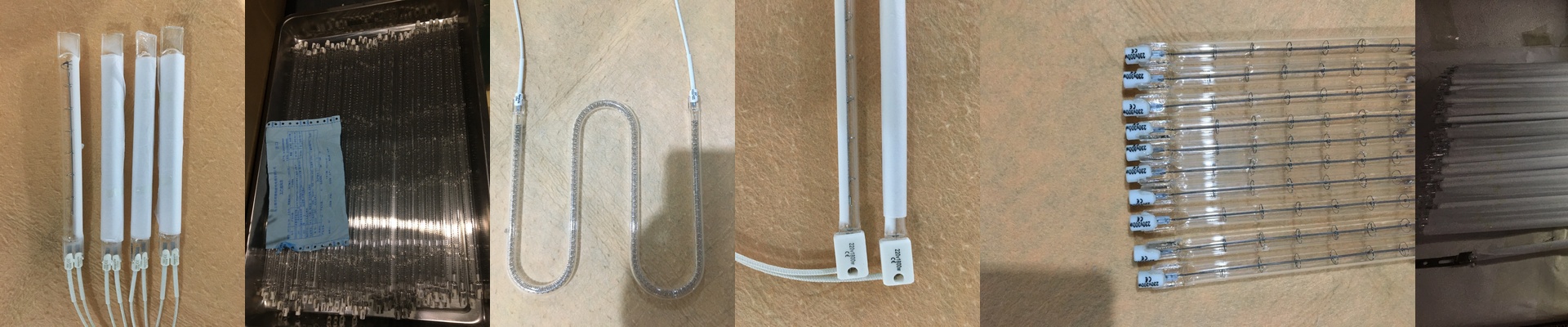
We build halogen infrared heaters for the places where heat isn’t optional—it’s the whole point. Think industrial settings where you need intense heat, right now, and you need to keep it under control. These quartz lamps put the energy exactly where you want it, without turning the whole work area into a sauna.
Power that fits in tight spaces
Here’s the thing: these heaters are all about packing a punch into a small footprint. A typical unit runs at 2500W, on 400V. That’s a serious amount of heat coming from something you can actually fit into a crowded machine. The 300mm tube length concentrates all that energy into a tight zone, so you can use a smaller reflector and keep the heat locked onto the target. Perfect when your machine is cramped but still needs to ramp up fast. But with that much power in a short length, you have to plan for heat. Cooling and thermal shielding need to be thought through so components stay safe—and your team stays safe too.
The materials that make it tough
The tube is quartz, and that choice makes sense. It handles high temperatures and keeps its cool when things heat up and cool down again and again. Inside, the halogen cycle keeps the filament clean as it runs. That means more consistent output over the life of the lamp, and fewer surprise burnouts than you get with standard infrared lamps. The output lands in the medium wave range—between shortwave and longwave—so it penetrates quickly without scorching the surface. And the R7s connector? It’s just practical for real-world setups. Two solid contacts, wired fast, alignment that stays put, and it holds up to vibration better than a lot of screw-terminal options.
Built for the jobs that can’t afford guesswork
These heaters are made for process-critical work: plastic welding, PET blowing, coating curing, thermoforming. Medium wave gives you heating curves you can actually count on, so you can dial in cycle times and get repeatable results. The 300mm size makes integration easier, and it sets you up for modular zone heating. That means you can swap out one lamp without tearing apart the whole array. For engineers, the appeal is simple: high heat density, stable output, and a design that can take a beating on the shop floor.