


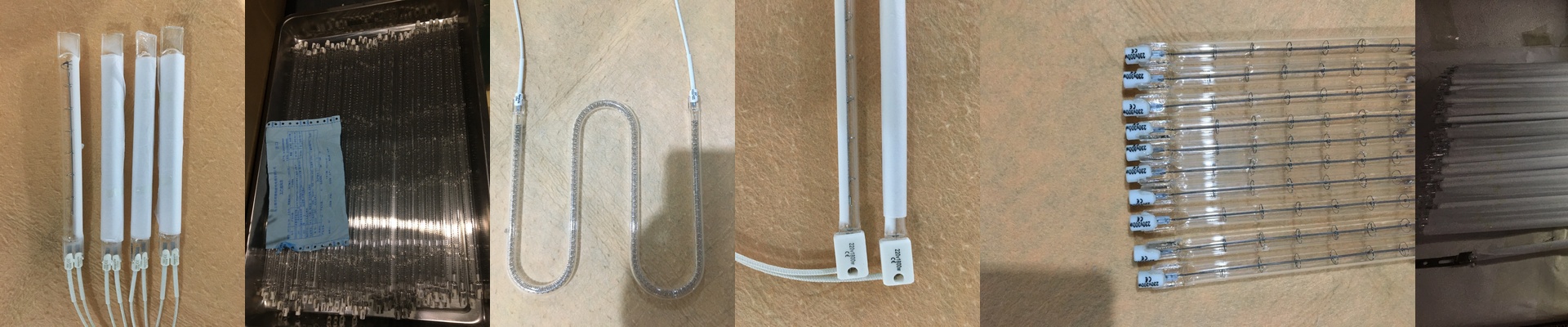

Why we put every single lamp through the “burn-in” test
When you see “factory prices” in the heating industry, there’s usually a catch. Usually, it means the company is cutting corners on quality control to keep the price tag low. We don’t do that. Instead, every single lamp tube that leaves our shop has to survive a full power-on aging test. No shortcuts. No “random sampling.” If it doesn’t pass, it doesn’t ship. The problem with “new” lamps Here is the frustrating thing about infrared lamps: if they’re going to fail, they usually do it almost immediately. Maybe there’s a tiny impurity in the quartz glass. Or a microscopic gap in a weld that you can’t even see. The moment that lamp hits operating temperature, pop—it’s gone. Now, imagine you’ve just installed a whole batch of these in a livestock brooding house. If 5% of them burn out in the first week, you’ve got a real problem. It’s not just about the cost of a few bulbs. It’s about the stress of sudden temperature drops and the risk to your animals. That’s a nightmare nobody needs. Catching the failures here, not at your place By forcing every tube to run under a heavy load at our factory, we trigger those early failures on our dime, not yours. We set up our testing racks to mimic the messy, fluctuating voltage of the real world. This proves the filament is stable and the seal is airtight before it ever touches your truck. For a farmer or a facility manager, this is the only thing that matters:**zero downtime.**You get a replacement that just works the second you plug it in. The honest trade-off Look, testing 100% of our stock takes more time. It costs us more in electricity. It’s way more expensive than the industry habit of testing one out of every hundred units. But it’s the only way to make sure you don’t get a “Dead on Arrival” product. You’re paying for the peace of mind that comes with knowing your heating grid won’t crash the moment the temperature hits freezing.