




Why Your R-com Lamps Keep Fading (And How We Fixed It)
If you’ve ever replaced an R-com lamp, you know it’s not as simple as just matching the wattage. The real headache is light decay. You know the feeling: everything is running perfectly on day one, but then the output starts to dip. Suddenly, your cycle times are drifting, your product quality is slipping, and you’re spending your afternoon tweaking settings just to get back to where you were. It’s frustrating. We wanted to stop that. So we built a replacement lamp that hits a 5,000-hour lifespan without that annoying fade you get with a lot of the cheaper imports.
The battle with the “dark cloud”
Here is what’s actually happening inside the tube. As the lamp runs, tungsten evaporates from the filament and sticks to the quartz glass. It creates this dark cloud that blocks the IR radiation from getting out. To stop this, we obsess over the halogen gas pressure. When the pressure is dialed in just right, it actually pushes that evaporated tungsten back onto the filament. If that mix is even slightly off, the lamp either burns out way too early or just dims out. We spent the time getting the gas fill right so the glass stays clear and the heat stays strong.
Glass that doesn’t crack
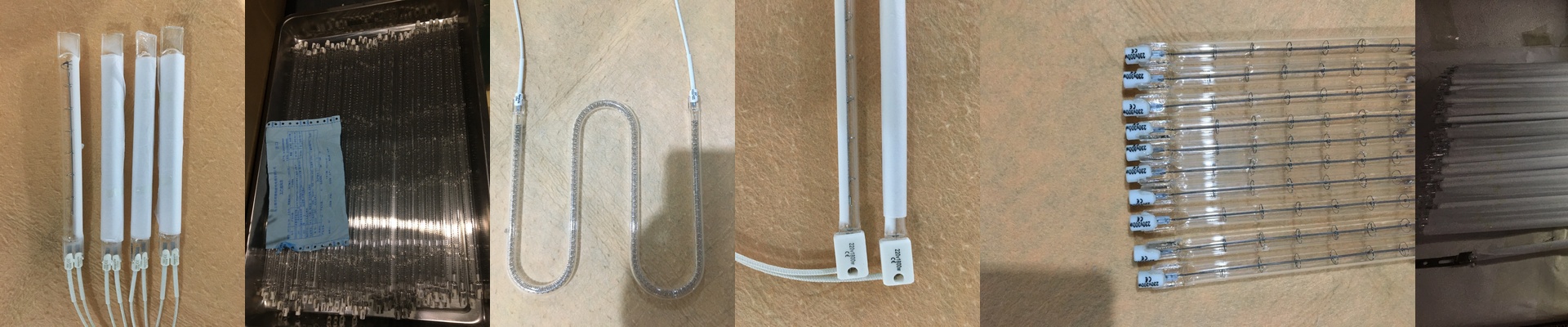
Then there’s the hardware. We use high-purity quartz because cheap glass hates thermal shock. If you’re cycling the power on and off, low-grade glass will eventually just snap. Our tubes are built to a tight tolerance, so they slide right into your R-com system. No forcing things, no awkward fits. Just a clean drop-in. Plus, you get a steady spread of heat across the whole tube. No “cold spots” to worry about. But a quick heads-up: if you run these at max voltage, you’re putting a lot of stress on your reflectors. If your reflectors are pitted or dirty, the lamp is going to run hotter and fail faster—no matter how good the gas mix is. Keep those reflectors clean.
Set it and forget it
We spent a lot of time on the physics of the filament itself, stabilizing the grain structure of the tungsten so it doesn’t thin out as quickly. What does that actually mean for you? It means you don’t have to mess with your PLC settings every couple of months to make up for fading heat. You wire it up, set your temperature, and it just stays there. Simple.